
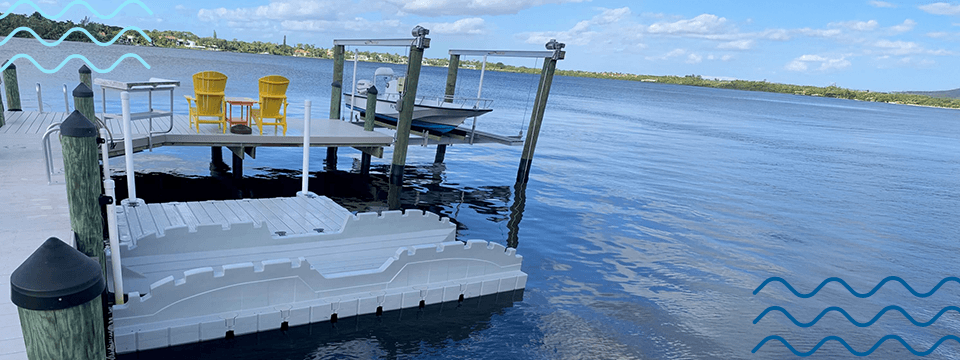
Few places have waterfronts quite like Florida. From the winding waterways to the beautiful waterfowl, the sights and sounds are hard to beat. You can practically feel them just thinking about it!
The centerpiece of this one-of-a-kind Florida lifestyle is the dock. It’s not just the place where boats and kayaks stay when they aren’t in use. It’s also a site for family gatherings and a morning cup of coffee. It’s a place for meditation and excitement. It can be the place where your adventures — and your fondest memories — begin.
But first, you have to design and install one. In this complete guide to designing Florida dock systems, we’ll help you plan your dock so that it can be everything you’ve dreamed of.
Key Factors That Influence Florida Dock Design
Dock systems in Florida face challenges from the environment and the law. Here are three of the most prominent:
1. Intense Sun and Saltwater Exposure
Sun and saltwater can degrade some types of docks with surprising speed. Wooden docks can become brittle, cracked and faded due to constant UV exposure. They can become less sturdy and more likely to give you splinters. They may also warp, making them harder to walk on.
Saltwater exacerbates these problems. Sea spray will naturally cover your dock in aerosolized salt, which accelerates rust in the dock’s metal components. Those components then become weaker, destabilizing your dock over time.
Choosing a dock material that withstands these conditions with minimal maintenance, like polyethylene or composite, is ideal.
2. Hurricanes and Storm Surges
Florida is often subjected to hurricanes and storm surges, especially during the six-month Atlantic hurricane season. Not even Southwest Florida or the inlands are safe. Both of these phenomena can raise water levels, which is problematic for old-school docks that don’t float. The force of the winds and waves can also cause significant damage to docks since they’re right on the water.
Your dock must be strong enough to withstand extreme weather and flexible enough to adjust with the changing water levels.
3. Local Dock Regulations
Your dock is governed by certain local, state and federal regulations. The Florida Department of Environmental Protection, for example, limits the square footage of docks and how many boats they can hold.
Your dock may also have to follow setback and view corridor requirements. The first dictates how far your dock must be from nearby property lines, while the second limits how much your dock can block your neighbors’ view of the water.
As the dock owner, it’s your responsibility to make sure your dock follows all relevant regulations. This includes environmental guidelines, such as those designating protected manatee zones.
How to Choose the Right Dock Layout, Material and Features
The challenges above are an unavoidable part of Florida waterfront living. But luckily, a well-designed dock can handle every single one of them! It all comes down to the layout, style and features.
Common Dock Layouts
There are four main dock shapes, each with its own benefits. Take a look at each one and consider whether they might complement your property:
- Straight: This dock design is simple and easy to maintain. It provides basic boat mooring capabilities and direct access to the water. Its narrow shape makes it a great option for smaller properties, too.
- L-shaped: This is a straight dock with a perpendicular section at the end. This section can create a protected swimming area while offering mooring for a second boat. You can even use the extended dock for extra seating. That means even more friends and family can enjoy the dock!
- T-shaped: Think of this layout like two overlapping L-shaped docks — each side of the T can hold its own boat. They also double your protected swimming areas and seating. That’s twice the fun!
- U-shaped: This is the largest and most robust of the major dock styles. It consists of two straight platforms bridged by a single perpendicular section at the end. Each of these sides can accommodate a boat, expanding your fleet to three. The center also serves as a completely protected pool area!
Dock Material and Composition
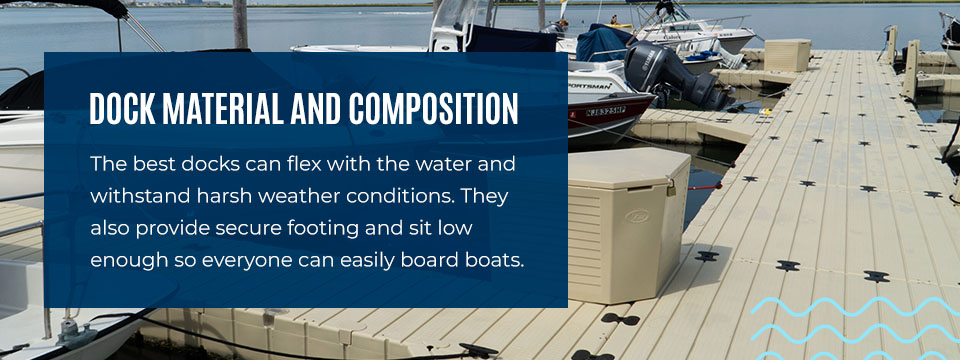
The best docks can flex with the water and withstand harsh weather conditions. They also provide secure footing and sit low enough so everyone can easily board boats. High-quality polyurethane and polyethylene can do all of the above. They are naturally immune to saltwater corrosion and will not rot, splinter or peel. They also contain UV inhibitors, which prevent them from becoming brittle in the Florida sun. They’re watertight, too! This makes them exceptionally durable and impact-resistant.
You can take these benefits even further with a modular dock system. These docks are made of interlocking segments that can flex with wave action while dissipating energy and reducing the stress placed on your dock.
Modular docks are also more customizable and easier to maintain. You can add new sections to create completely unique dock shapes. This gives you more options and can make it easier to follow local size regulations. You can also replace any sections that get damaged without affecting the rest of the dock.
Custom Features for Your Waterfront
If you’ve got the space, you can power up your dock with additional features. They don’t just have to give you more ways to have fun, either. They can increase the safety and accessibility of the dock for everyone.
Four of the most common are:
- Boat lifts: These features allow boats to drive up out of the water when they dock. This simplifies launches and prevents hull fouling. It can also make boarding easier.
- PWC ports for jet skis: If you’re a jet ski fan, you can add some PWC ports to the end of your dock. Like boat lifts, these ports make boarding and docking your jet skis much easier. No more trips back and forth to the garage for you!
- Kayak and paddleboard launches: Kayaks and paddleboards can be tricky to board if you aren’t careful. Luckily, there’s a dock feature that lets you store and launch these vessels from your dock itself!
- Gangways and handrails: These features make every part of the dock safer to navigate. Gangways make it easier for kids and older folks to get on and off boats, while handrails offer stability while walking to and from the launch.
Each of these features can be a great addition to your dock. Just make sure you’re keeping local regulations and environmental concerns in mind
Build Your Residential Dock With EZ Docks
If you’re looking for a partner to help with custom dock design in Florida, EZ Docks has got your back. We want to help you maximize your waterfront space while protecting the environment around you. That way, you can have peace of mind and the fun you deserve!
All of our features have a 10-year warranty and can make your dock compatible with jet skis, kayaks and more. You can even render a model of your dream dock in our EZ Dock Designer.
To consult with a Florida dock expert, fill out our contact form.