
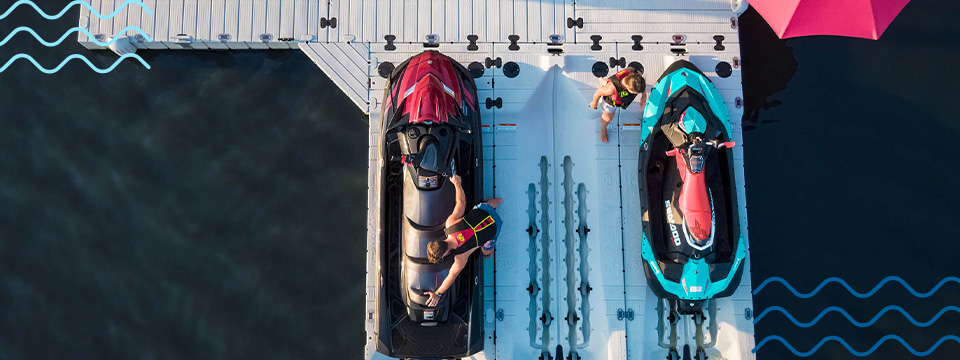
Changing water levels present significant challenges for dock owners. A fixed dock can become damaged or unusable when water levels are excessively high or low. Modular docks offer adaptable solutions for safe, continuous access to the water in various conditions.
Understanding Modular Floating Docks
Modular floating docks are versatile, customizable platforms that consist of interconnected, buoyant sections. While traditional fixed docks are stationary structures built on cribs or pilings, modular floating docks rise and fall with the tide or fluctuations in lake depth. They’re made of durable, weather-resistant materials such as linear low-density polyethylene (LLDPE).
Modular floating docks are ideal for the following applications:
- Swimming platforms
- Fishing platforms
- Personal boat moorings
- Large-scale marinas
- Industrial work platforms
LLDPE offers properties such as impact strength, inherent buoyancy, chemical inertness and ultraviolet (UV) resistance, making it a common floating dock material.
A modular dock’s interconnected sections often feature durable coupling mechanisms such as specialized connectors, pins and bolts for flexibility and structural integrity. A floating dock also features an anchoring system, such as a shore connection system or deadweight anchors. This prevents horizontal drift while allowing the dock to move vertically with water levels.
What Are the Benefits of Modular Docks for Changing Water Levels?
Modular floating docks offer the following advantages:

Adaptability and Consistent Accessibility
A modular dock’s buoyant design enables it to move with water levels. Rather than becoming stranded on the shore in low waters and submerged under high waters like traditional docks, a floating dock is available for use in all water conditions.
With a floating dock, you have safe, consistent access to your watercraft during all tidal changes and seasonal water depth fluctuations.
Flexible Configuration
The modular nature of floating docks makes them easy to reconfigure, expand, reduce or relocate based on evolving environments or specific needs. You can add, remove or move individual sections for different shoreline conditions or various activities.
Damage Prevention
Floating docks move with water, reducing strain on the dock’s structure and its moored watercraft. Traditional docks typically wear faster because of water levels shifting against their fixed structures. This results in excellent longevity, preventing damage such as structural stress, warping, splintering and foundation erosion.
Reduced Maintenance, Easy Installation and Cost Savings
Durable construction materials help floating docks resist rust, rot and UV damage. This results in fewer maintenance and repair needs than traditional docks.
Modular docks are also easy to assemble and disassemble. Their modular sections are lightweight. You can often install or remove them without heavy machinery or complex foundation work. This is especially beneficial for seasonal installation in areas with shifting ice. Minimal maintenance requirements, reduced installation complexity, and greater longevity result in long-term cost savings.
Environmental Friendliness
A modular dock minimizes disruption and damage to aquatic ecosystems. It doesn’t require you to drive pilings into the seabed like traditional docks do, which preserves natural underwater habitats and water flow. Removing the need to hammer posts into the seabed helps keep the water clear and protects delicate underwater habitats.
Is a Modular Dock Right for Your Needs?
Modular docks can withstand various types of water level changes, making them perfect for the following situations:
- Deep water: Driving pilings into deeper water can result in an unstable structure. A floating dock is the best option if you need to create an access point in deep water.
- Tidal changes: Does the tide in your desired dock area change significantly? If it lowers enough to hinder standard dock access, a floating dock is the best option.
- Seasonal water level fluctuations: Some bodies of water experience significant rises or falls in water levels depending on the season. Opt for a floating dock if you expect significant seasonal changes in water levels.
- Weather-induced water changes: Weather conditions, such as freezing temperatures, heavy rain and droughts, can also impact water levels. If your water access area is prone to freezing, flooding or low water levels due to unpredictable weather, a floating dock is an excellent solution.
- Dam operations: Dam releases and storm surges can impact water levels in areas with dam operations.
- Plans to expand your layout: Consider how you might want to change your dock in the future. You might want to add a section for a larger boat, build a dedicated fishing platform or adjust the dock for new recreational activities. These adjustments are much easier if you install a floating dock.
How to Choose the Right Modular Docks for Changing Water Levels
These factors can help you choose the right modular floating dock for fluctuating water levels:
Purpose and Budget
Consider typical water conditions and how you plan to use your dock before choosing a configuration. For example, an L-shaped configuration is the best option for basic access in calm waters. A U-shaped or T-shaped configuration is better for multiple boats or recreational activities in busier areas. Opt for a straight, single-run floating dock for swimming access or a small boat slip in calm waters.
If you need a floating dock for commercial purposes or a high-traffic area with multiple uses, you can create a more complex layout. This can help you accommodate multiple activities, such as boating, fishing and sunbathing, on one dock. It’s also helpful to consider how you plan to expand in the future. You can add or adjust sections as needed.
Before installing a modular dock, establish your budget. Starting with a small configuration is best if you have a tighter budget, but you can create a more complex layout with a higher budget.
Environmental Conditions
Water, tides, waves and ice can impact docks. Air-filled floating docks are best for calmer freshwater, while foam-filled floats are more suitable for rougher saltwater. Sturdier configurations and anchoring systems are necessary for areas with strong waves or significant tides.
Weight Capacity
To determine the necessary weight capacity, first estimate what your dock’s live load will be. This includes the people and equipment that may be on top of it, as well as the total boat weight its anchoring system will need to support. Next, you can add a potential dock’s dead load, including its sections and hardware, to the live load. Divide the total weight by the manufacturer’s rating per float, factoring in a safety margin to ensure stability.

Invest in Durable Modular Docks for Any Shoreline
EZ Docks offers durable modular floating dock systems specifically designed for the toughest conditions and changing water levels.
These high-quality solutions enhance performance and longevity, providing dependable water access regardless of the tide’s rise or fall. They’re slip-resistant, easy to clean and never rot or splinter. We also offer dock accessories to make your floating dock feel more like home.
Contact us to request a quote and learn more about our innovative floating docks.
Linked Sources